

Digital programme · 2026
Standard
Coltrane
Eight pieces.
Five musicians.
Coltrane’s musical world.
3 November · 20:00
Opus Jazz Club8 Mátyás utca, Budapest
Tonight with the musicians of MAO
Familiar songs,
personal voices.
A jazz standard gives musicians a shared starting point. How they take it further is a question each performance answers afresh.
Tonight’s John Coltrane 100 programme brings together the four tracks from Standard Coltrane and Afro Blue, Softly, as in a Morning Sunrise, My Favorite Things and Cousin Mary. Trumpet, tenor saxophone, piano, double bass and drums are the five voices you will hear tonight.
Tonight’s programme
Eight pieces.
One evening.
The four tracks from Standard Coltrane
Behind the album
Recorded in 1958.
Released in 1962.
The music comes from a single studio session in July 1958. These four recordings were brought together on an album several years later. The recording date and the release date mark two different points in Coltrane’s story.
All four pieces are songs by other composers. Here, a “standard” means a composition that has become part of jazz musicians’ shared repertoire: its melody and harmonies provide a framework for individual ideas. In his notes for the Concord release, Ashley Kahn highlights the fresh inspiration Coltrane found in older songs.
Two line-ups, two moments in time
The musicians you will hear tonight
Modern Art Orchestra · 3 November 2026
- Fekete-Kovács Kornéltrumpet
- Ávéd Jánostenor saxophone
- Cseke Gáborpiano
- Barcza Horváth Józsefdouble bass
- Csízi Lászlódrums
A guide for your ears
You don’t need to read music.
Just follow one detail.
Keep the melody in mind.
Remember a short phrase from the theme. Can you recognise it later, when the soloist changes its rhythm, pitch or emphasis?
Shift your attention.
During a solo, spend a few moments listening to the piano, bass or drums. Who keeps things moving, and who responds to a new idea?
Listen to the return.
When the theme returns, does it feel different? Have the volume, momentum or roles within the ensemble changed?
A closer listen
Eight pieces,
eight ways to listen.
Don’t Take Your Love from Me
Music and lyrics: Henry Nemo
Henry Nemo’s song was published as sheet music in 1941. Written for the voice, it leaves the instrument to carry the phrasing and emotional shape in an instrumental performance.
Listen to the ends of phrases. Do they close with a sustained note, a short response or silence? The same melodic phrase can have a different effect depending on how its last note is released.
Another listening idea
Compare the trumpet and tenor saxophone through their tone as well as their volume. How does a motif change colour between the two instruments? They need not repeat each other’s melody exactly: listen to the character of the sound.
I’ll Get By
(As Long As I Have You)
Music: Fred E. Ahlert · Lyrics: Roy Turk
The song was published in 1928, making it thirty years old when Coltrane recorded it in 1958. An earlier popular song becomes shared material for another generation of musicians.
Choose a short melodic phrase and notice the timing of its entry. Does the soloist land on the beat, hold back slightly or seem to anticipate it? Try following the steady movement of the bass at the same time.
Another listening idea
Hear the piano accompaniment as a voice in its own right. Is it busy, or does it leave space? How can a brief chord change the mood of the soloist’s previous phrase?
Spring Is Here
Music: Richard Rodgers · Lyrics: Lorenz Hart
The song comes from I Married an Angel, which opened on Broadway in 1938. There is a Hungarian connection too: the musical was adapted from a play by János Vaszary.
Focus on the longer notes and the silence between them. What keeps a melody alive when there are few notes? Notice the tone, the attack and the accompaniment’s response.
Another listening idea
The title promises spring. What does tonight’s performance suggest to you: brightness, anticipation, distance? This is your own impression; there is no single “correct” mood to find.
Invitation
Music: Bronisław Kaper · Lyrics: Paul Francis Webster
The longest track on Standard Coltrane runs for more than ten minutes. It gives you time to hear how the musicians on the original recording develop and extend an idea.
Follow the changing energy over a longer stretch of music. Where do the notes grow denser, and where does the playing relax? With each new solo, do the piano and drums become more active, or does restraint create the tension?
Another listening idea
Try to recognise recurring melodic or harmonic landmarks. A solo can develop freely while the musicians move through the same shared structure again.
Afro Blue
Music: Mongo Santamaría
Afro Blue entered the jazz repertoire from Afro-Cuban music. It appeared on Santamaría’s album Mongo and was later taken up by Coltrane, Dizzy Gillespie and Cal Tjader. Tonight, another composer’s music offers a way into Coltrane’s world.
Start with the bass and drums. Choose a recurring rhythmic pattern and hold it in mind as the melody enters. Do the accents fall in the same places, or do they group the pulse differently?
Another listening idea
What changes as a short motif repeats? Volume, the density of the accompaniment, melodic embellishments and the instruments’ responses to one another can all help the music develop.
Softly, as in a Morning Sunrise
Music: Sigmund Romberg · Lyrics: Oscar Hammerstein II
The tempo marking on the 1928 sheet music refers to a tango. It is an intriguing starting point for a jazz performance, where the rhythmic character of an older song can be freely reimagined.
Listen for the return of each cycle. Is there a turn in the bass or melody that tells you the form has begun again? Notice how the soloist’s rhythm changes above it.
Another listening idea
The mood can shift between the theme and the improvisation. Which instrument brings fresh momentum, and when do the musicians let a phrase hang in the air?
My Favorite Things
Music: Richard Rodgers · Lyrics: Oscar Hammerstein II
The song comes from The Sound of Music. Its waltz pulse moves between minor and major. On stage, Maria and the Mother Abbess sing it; in the film, Maria uses it to comfort the children during a storm.
Try feeling the pulse in threes: one-two-three, one-two-three. If tonight’s version keeps this character, how do the musicians play with it? Notice when the harmonies sound darker or brighter.
Another listening idea
How recognisable does the melody remain during the solos? A single short rhythm or recurring motif may keep the original song in your ear.
Cousin Mary
Music: John Coltrane
This is Coltrane’s own composition. Cousin Mary appears on Giant Steps, recorded in 1959 and released in 1960. It is a swinging blues: alongside its harmonic explorations, the album also gives the blues an important place.
Listen for call-and-response phrases. Does a short motif draw an answer from another instrument? Notice how the recurring blues form holds the different solos together.
Another listening idea
Here, blues also describes a musical form. It need not sound sad: follow its recurring turning points and the momentum of the swing.
Something to take home
Which moment stayed with you?
Perhaps a melody, a reply from the drums, the contrasting sounds of trumpet and saxophone, or a few seconds of silence. You can bring these memories back to the standards the next time you listen.
Tonight is shaped by the five musicians on stage.
A RECORD IS NO
MUSEUM PIECE.
Modern Art Orchestra’s story began in 2005 under the direction of Fekete-Kovács Kornél. Since then, more than twenty-five hours of music have been written specifically for the orchestra. That gives a fair indication of why, for MAO, the big band has never been a ready-made formula.
The orchestra is also a workshop: performers, composers and arrangers work together, often with one person taking all three roles. Jazz, contemporary classical music, electronics — here, boundaries serve as reference points rather than fences.
Seen in this light, the Legendary Albums series is no exercise in nostalgia. Reproducing a 1958 recording note for note would be a curious undertaking: the original draws its power from those musicians playing together in that studio, at that moment, responding to one another.
Sixty-eight years later, a much more interesting question is what five musicians today will do with this music.
What remains untouched? What shifts? Where does the present make itself heard? The score can offer guidance, but improvisation means that every concert answers these questions a little differently.
Perhaps this comes closest to the spirit of the original records. Keep them alive. Play with them.
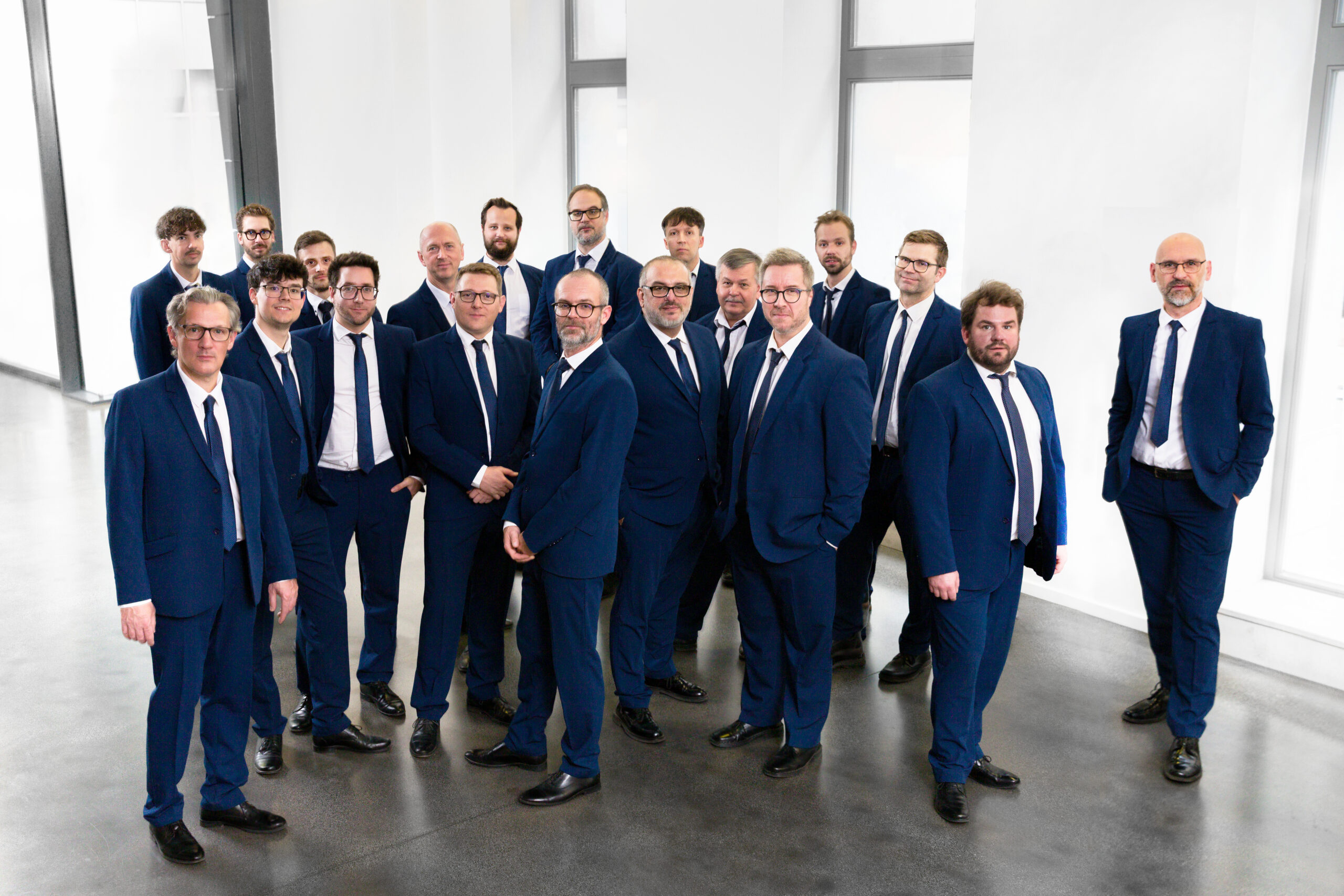
AND A CREATIVE COMMUNITY.
Modern Art Orchestra
MAO · November and December 2026
See you at
the next one.
After tonight, there are three more dates at Opus: two MAO meets the masters! evenings and the closing concert of the John Coltrane 100 series. Choose your next concert and book your seat.
MAO meets the masters!
Cseke Gábor
meets Maria Schneider
18:30 and 21:00 · Opus Jazz Club · 8 Mátyás utca, Budapest
Legendary Albums · John Coltrane 100
John Coltrane
and Johnny Hartman
20:00 · Opus Jazz Club · 8 Mátyás utca, Budapest
MAO meets the masters!
Korb Attila
meets Thad Jones
18:30 and 21:00 · Opus Jazz Club · 8 Mátyás utca, Budapest
Concerts, stories and news
Is your next concert
in the diary?
Prefer to receive MAO’s concert recommendations by email? Subscribe to our newsletter for upcoming concerts and news from the orchestra.
Modern Art Orchestra
A jazz and contemporary classical ensemble under the artistic direction of Kornél Fekete-Kovács.
Beyond the concert posters: music, conversations and glimpses of everyday life at MAO.