

ILLÉS SZABÓ
MEETS
PAT METHENY
NOT A TRIBUTE.
A CONVERSATION.
In the MAO meets the masters! series, composers and arrangers close to the orchestra each sit down with one of the great masters who shaped their musical thinking. Not an imitation, not a memorial concert. More of a reply, in their own voice.
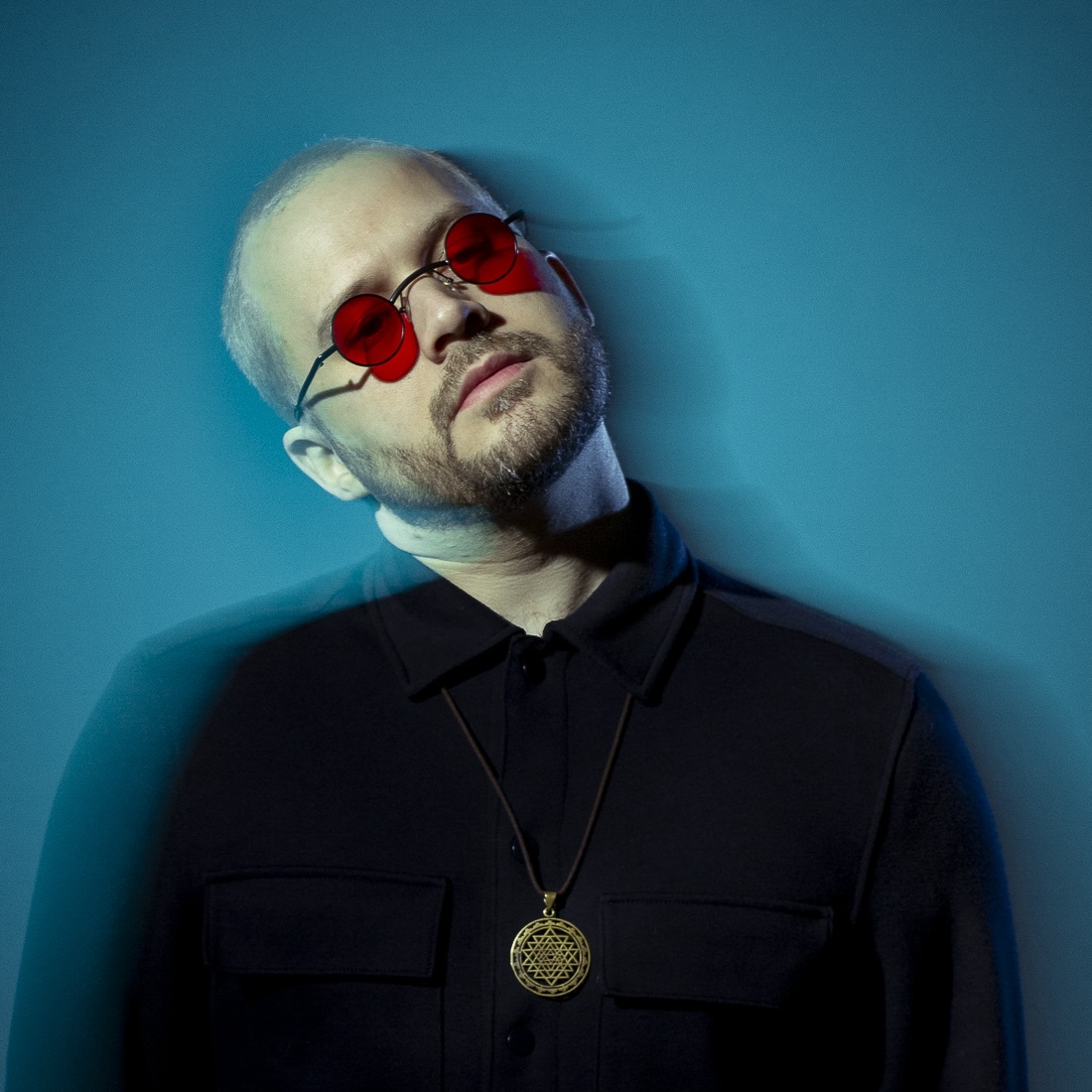
Tonight, guitarist, composer and arranger Illés Szabó is in conversation with the music of Pat Metheny. For Illés, this is no style exercise:
"For me, this is first and foremost an emotional matter. This music stirs very strong emotions in me, truly from the very first moment I heard it."
The two halves of the program answer each other: three Metheny compositions for big band, and three original pieces that start out from Metheny's world but speak in Illés's own language. Guitar, big band, and two voices that now and then blend into the orchestra like instruments.
MELODY × SPACE
SIX TUNES.
TWO COMPOSERS.
Three pieces by Pat Metheny, and three original compositions by Illés Szabó that draw on Metheny's music.
The running order will be announced from the stage. That's part of the game.
A FEW THINGS
WORTH LISTENING
FOR
What Do You Want?
The original is a guitar–bass–drums trio recording, from Trio 99 → 00 (2000). Illés says this is the piece where he could let his imagination run most freely. Notice what happens to music conceived for three instruments when a whole big band suddenly plays it.
Blossom
Inspired by Metheny's debut album, Bright Size Life, which is full of tunes that grow out of a single interval. The main motif of Blossom is built on two consecutive fourths. Once you hear those two steps, you can follow where they grow throughout the piece.
On Her Way
A co-composition by Metheny and Lyle Mays, from Speaking of Now (2002). Illés describes the Metheny Group's tunes as "very complex and layered music," and those layers are what he wanted to bring out. Try following two lines at once: the melody, and whatever is moving underneath it.
Akik tudják (Those Who Know)
The piece rides on a "flying" sixteenth-note groove that keeps the whole band in motion. Its peak is a musical conversation between two soloists: listen to how they answer each other, and who carries the other's idea further.
Have You Heard
The opening track of Letter from Home (1989): driving, forward-leaning, like the first miles of a long journey. In this period the Pat Metheny Group often colored the melody with wordless vocals. Listen for who takes on that role in the band tonight.
Time Thief
A typical Midwestern "Americana" mood: wide-open space, a simple, singable melody. Illés also wrote it in memory of Charlie Haden, Metheny's musical partner on the duo album Beyond the Missouri Sky.
The voice as an instrument
In Metheny's music, the voice often doesn't carry lyrics; it finds its own place among the instruments. Tonight two vocalists join the band: listen for when they become one of its "instruments."
A guitar that phrases like a horn
Metheny's playing is often described as shaping notes the way a horn player does: in arcs, with air, breathing. Notice when the guitar "sings," and when a trumpet or saxophone answers it.
A melody to take home
Metheny's melodies are easy to hum at first, but there are often intricate harmonies and rhythms running underneath. If a tune is still in your head after the concert, you got exactly what this music promises.
The arc
These pieces are rarely "just" heads and solos. They're more like stories that build slowly, reach a peak, then come to rest. Notice where the music starts to rise, and what lifts it.
FROM THE VERY
FIRST MOMENT.
Illés Szabó is a jazz guitarist, composer and arranger. He studied at the Liszt Academy of Music in Budapest and at the Conservatorium van Amsterdam. In 2021 he won the Hungarian Jazz Association's big band composition competition.
As a performer, he is a member of Lowland Collective, Mirtill Mycheller's Swinguistique, the world music trio of Ági Szalóki, Szilvi Bognár and Bori Magyar, and Vintage Dolls. As a composer and arranger, he has worked with the Modern Art Orchestra, Bea Palya, Mörk, Júlia Karosi and the RTQ String Quartet, Vera Tóth, the Budapest Jazz Orchestra, and the BJC Big Band featuring Gergő Borlai, among others.
When he started arranging for big band, the idea of mapping out this world through Metheny's tunes came to him very naturally. It remains a guiding thread whenever he writes his own music.
Before the concert, he said: "Honestly, I'm looking forward to the whole concert with great excitement, and I'm very curious to see which directions the band and the soloists will take the music I wrote."
STAYED FOR
THE GUITAR.
MELODY.
SPACE.
MOTION.
Pat Metheny was born on August 12, 1954, in Kansas City, into a musical family. He started on trumpet at eight, switched to guitar at twelve, and by fifteen he was working regularly with the best jazz musicians in Kansas City.
At eighteen he became the youngest teacher ever at the University of Miami, and at nineteen the youngest ever at Berklee College of Music in Boston. In 1974 he joined vibraphonist Gary Burton's band, and his first album, Bright Size Life, reinvented the sound of jazz guitar for a new generation.
In 1977 he founded the Pat Metheny Group with pianist Lyle Mays. Its sound – melodic, spacious, earthy and floating at the same time – has stayed in the musical memory of generations. The Group won seven consecutive Grammy Awards for seven consecutive albums.
Metheny never stopped experimenting: he was one of the first jazz musicians to treat the synthesizer as a serious instrument, and he has played with artists as diverse as Steve Reich, Ornette Coleman, Herbie Hancock, Jim Hall, Milton Nascimento and David Bowie. Since 1974 he has played between 120 and 240 concerts a year.
NINE THINGS
ABOUT PAT METHENY
As a small child, he improvised his own lullabies and sang himself to sleep with them.
His family was wary of the guitar at first. They finally agreed, but in exchange he had to play French horn in the school band.
The Beatles on The Ed Sullivan Show sparked his interest in the guitar. He saw "A Hard Day's Night" five or six times at the local movie theater.
At thirteen he saw his hero live, just seven weeks before Montgomery's death. His mother varnished the autograph and hung it on the wall.
At fifteen he won a scholarship to a one-week jazz camp, where Hungarian-born guitarist Attila Zoller became his mentor.
By his own account, as a young man he spent about twelve hours a day practicing or listening to records. His reason: "The music is too hard."
The instrument called the Pikasso was built for him by Canadian luthier Linda Manzer: a single instrument with forty-two strings.
"This Is Not America" came out in 1985 as part of a film soundtrack and made the UK Top 40.
On his 2010 album Orchestrion, he surrounded himself with custom-built, mechanically driven instruments, playing a whole orchestra on his own.
PERSONNEL

"For me, the voice is an instrument in its own right, one of the most versatile means of expression in music."
"I've loved, listened to and sung along to Pat Metheny's music for 20 years… and now I get to hear the band from the inside. (As long as I don't forget to come in…)"
A RECORD IS NOT
A MUSEUM PIECE.
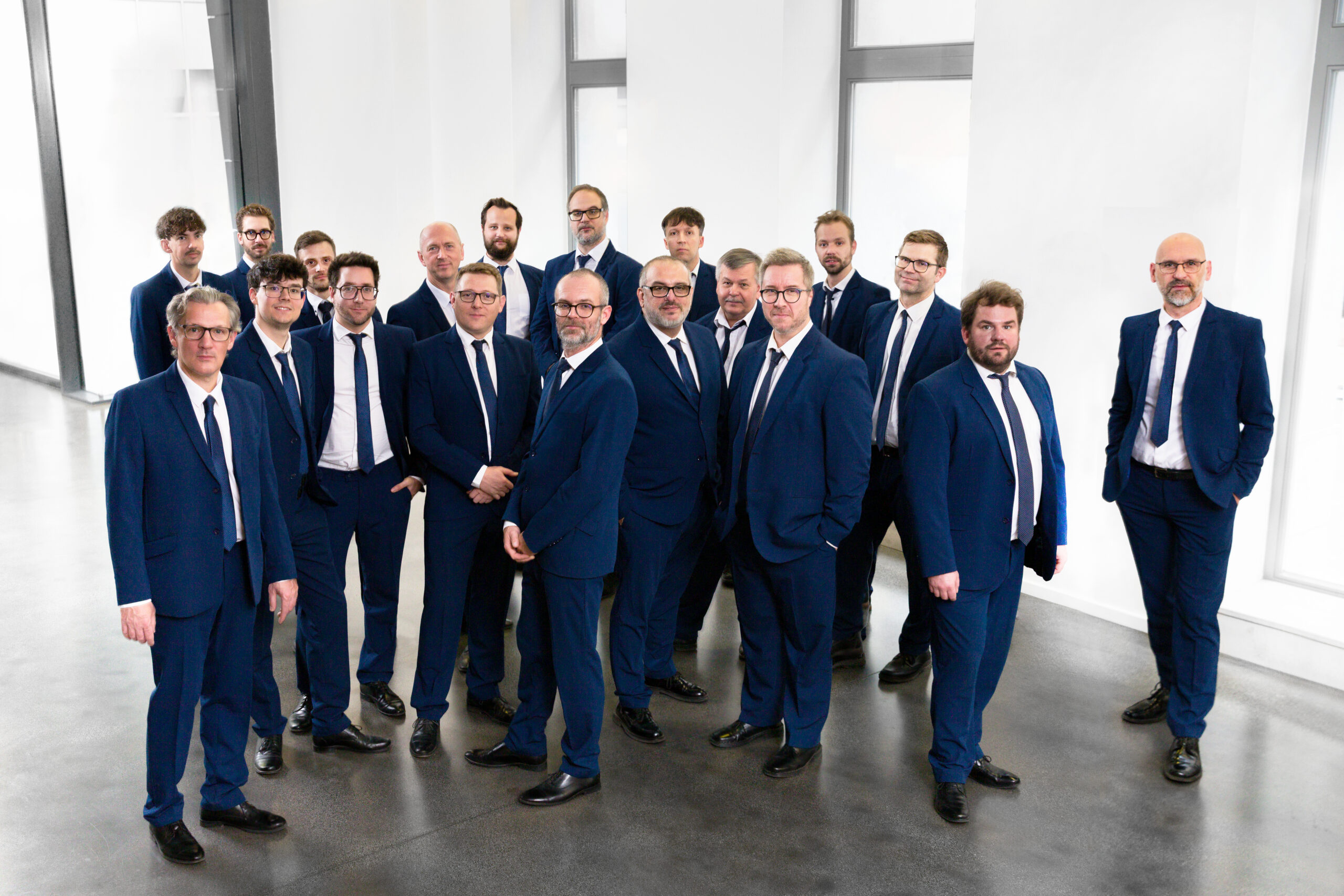
The Modern Art Orchestra's story began in 2005 under the leadership of Kornél Fekete-Kovács. Since then, more than twenty-five hours of large-ensemble music have been written specifically for the band. That says a lot about how, for MAO, the big band was never a ready-made recipe.
The orchestra is a workshop too: performers, composers, and arrangers work together, often with one person wearing all three hats. Jazz, contemporary classical music, electronics – here the boundaries are more like reference points than fences.
Seen from here, the Legendary Albums series isn't an exercise in nostalgia either. Reproducing a 1958 recording note for note would be strange anyway: the power of the original comes precisely from those musicians playing in that studio, at that moment, reacting to each other.
Sixty-eight years later, the far more interesting question is what five musicians today will do with this music.
What stays untouched? What shifts? Where does the present cut in? The score can offer something to hold on to, but because of the improvisation, the answer is a little different at every concert.
Maybe that's closest to the spirit of the original records, too. Not preserving them. Playing with them.
AND A CREATIVE COMMUNITY.
TWO SERIES.
MANY NEW NIGHTS.
This fall, the Modern Art Orchestra presents two series at the Opus Jazz Club. In MAO meets the masters!, the orchestra's composers enter into conversation with great masters, while Legendary Albums – John Coltrane 100 follows Coltrane's path through four records.
6:30 PM · 9:00 PM
8:00 PM
6:30 PM · 9:00 PM
8:00 PM
6:30 PM · 9:00 PM
SEE YOU AT
THE NEXT ONE.
Concerts, new programs, behind-the-scenes stories, fresh news – and sometimes things that simply don't fit on a concert poster.
If you'd like to hear about upcoming nights in good time, subscribe to the MAO newsletter.
A jazz and contemporary classical ensemble
under the artistic direction of Kornél Fekete-Kovács.