

KORNÉL FEKETE-KOVÁCS MEETS BOB BROOKMEYER
NO QUOTING.
NO IMITATION.
THE CONVERSATION CONTINUES.
In the opening concert of MAO meets the masters!, the musical worlds of Kornél Fekete-Kovács and Bob Brookmeyer enter into dialogue.
This evening is more than a tribute. Brookmeyer’s transparent textures, rich harmonies and sophisticated approach to large ensemble writing meet Kornél Fekete-Kovács’s own compositional voice. Influence does not return as imitation: it becomes new music.
ONE LARGE ENSEMBLE.
ONE LIVING DIALOGUE.
INFLUENCE × OWN VOICE
TONIGHT'S PROGRAMME
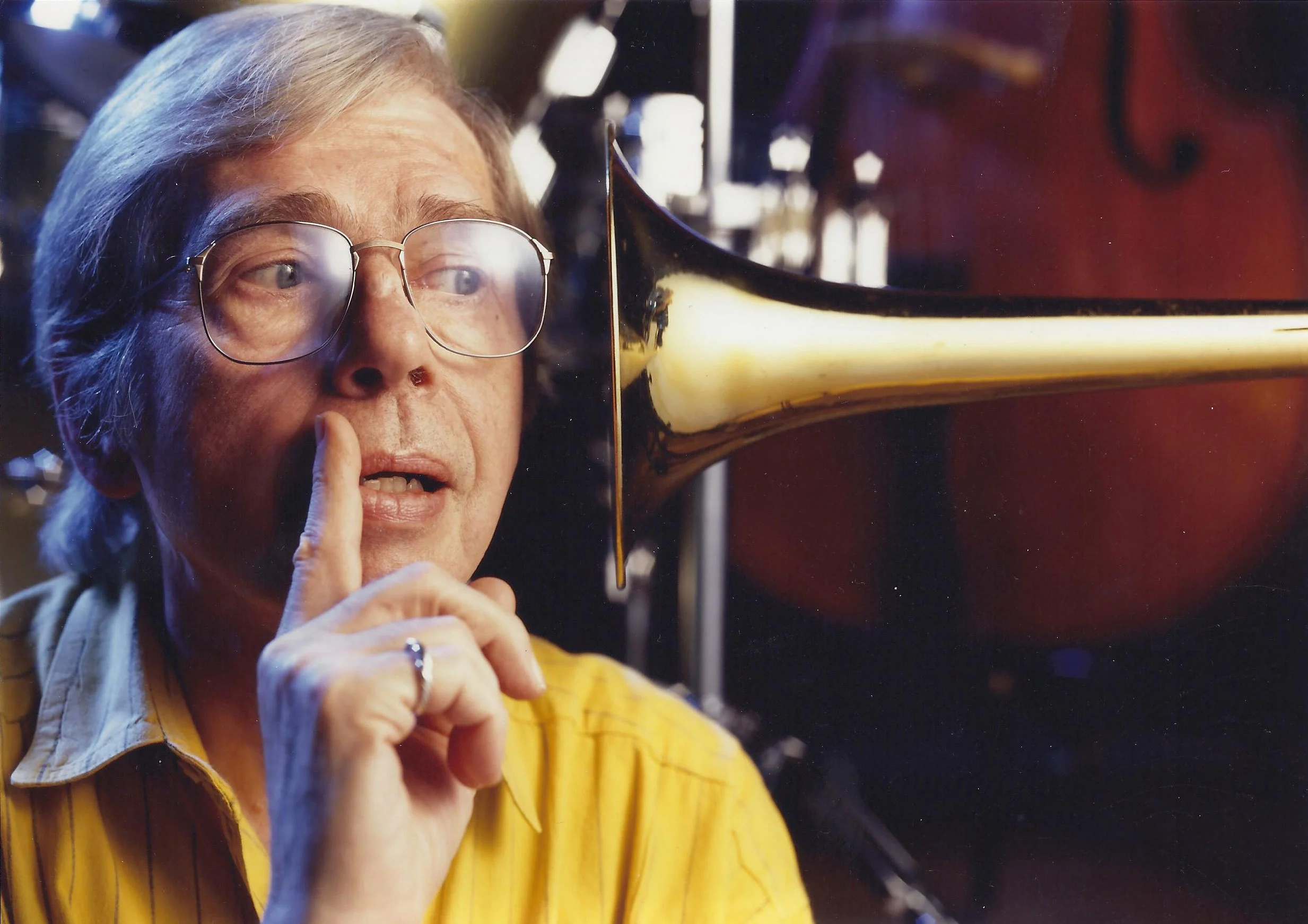
BOB
BROOKMEYER
Bob Brookmeyer’s career connected several eras of modern jazz. Born in Kansas City, Missouri, he began playing clarinet at the age of eight and switched to trombone at thirteen. He later became one of the few major jazz musicians to make the valve trombone his primary instrument.
During the 1950s he performed extensively with Gerry Mulligan, first in Mulligan’s quartet and sextet and later, from 1960, as chief arranger, composer and featured soloist with the Concert Jazz Band. In 1965 he became a founding member of the Thad Jones/Mel Lewis Jazz Orchestra, where he both arranged and played lead trombone.
In the later stages of his career, composition, arranging and education became increasingly central to his work. He taught in the United States and Europe and developed the ensemble that became his award-winning NewArt Orchestra.
Clear forms, layered orchestral textures, sophisticated modern harmony and space for improvisation all became hallmarks of his musical language. His work had a lasting influence on generations of composers and arrangers writing for large jazz ensembles.
IT IS THE INSTRUMENT.
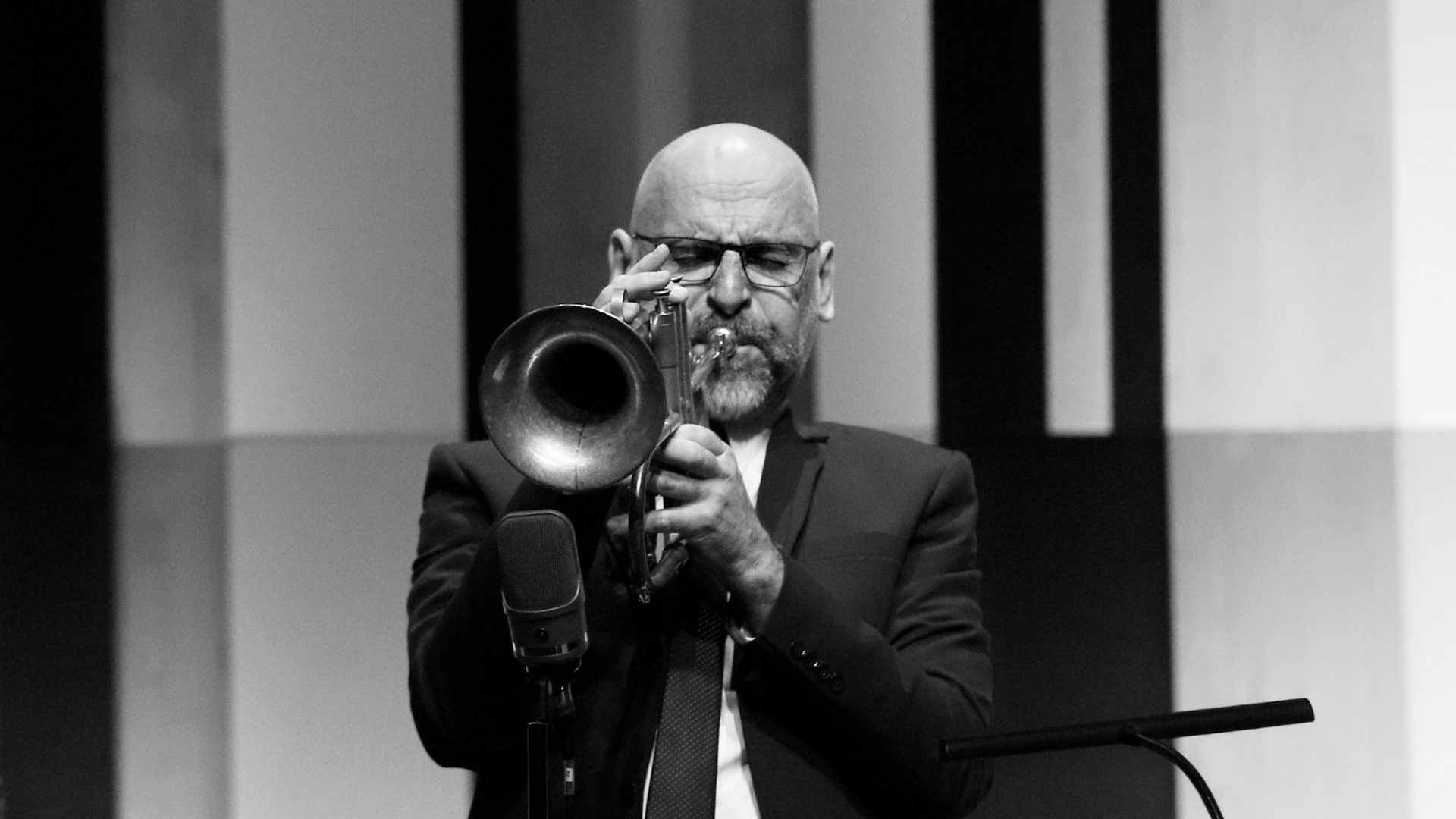
KORNÉL
FEKETE-KOVÁCS
Kornél Fekete-Kovács is a composer, trumpeter, flugelhorn player and arranger, and a prominent figure on the Hungarian contemporary jazz scene. His work as a composer includes major full-length compositions written for jazz big band.
Since 2005 he has served as artistic director, soloist and composer of the Modern Art Orchestra. From the beginning, his vision has been to make MAO a creative community in which musicians are not only performers, but artists who inspire one another and contribute their own ideas.
His music draws on a deep knowledge of the jazz tradition while remaining open to classical and contemporary music. Improvisation, composition and the colours of the large ensemble meet in a musical language driven by curiosity and exploration.
IT IS A POINT OF DEPARTURE.
TWO WORLDS.
ONE WAY OF THINKING.
This is not a tribute concert in the conventional sense. Brookmeyer’s music is not presented as a closed chapter of history, but as a way of thinking to which a contemporary composer can respond in his own voice.
The common ground is the large ensemble itself: a space in which form, colour, texture, harmony and improvisation can constantly be reconsidered.
MODERN ART
ORCHESTRA
A BIG BAND.
Modern Art Orchestra was founded in 2005 by trumpeter and composer Kornél Fekete-Kovács. Working at the intersection of contemporary jazz and classical music, the ensemble has explored new sounds and musical forms from the very beginning.
MAO operates as a creative musical workshop. Its members are not only performers: several are also active composers, arrangers and bandleaders. This creative environment has generated a substantial repertoire written specifically for the orchestra.
Innovation and tradition are equally present in MAO’s programmes. For the orchestra, what is played matters just as much as how it is played. Improvisation gives every performance a strong sense of the here and now, making each concert a unique musical experience.
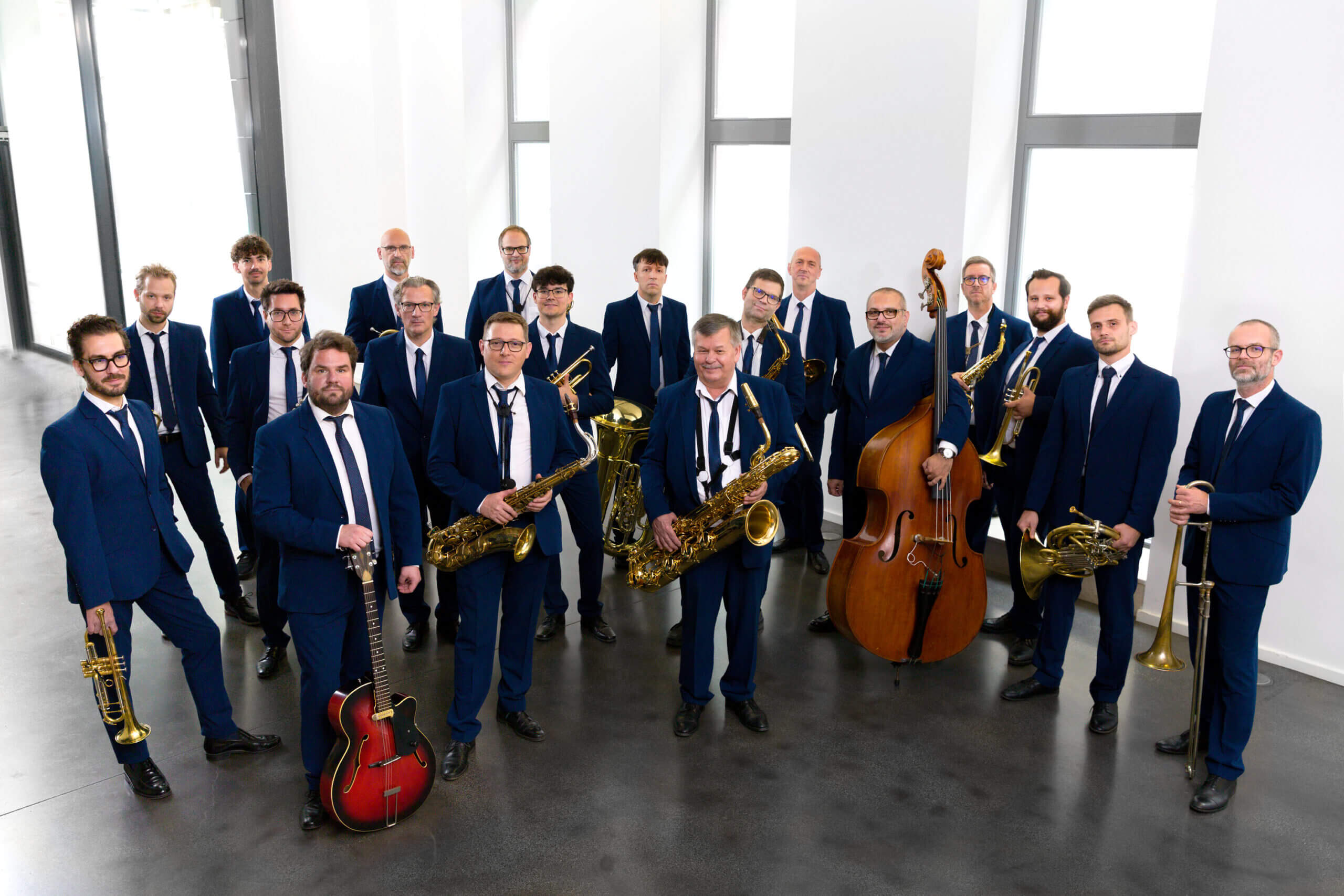
THE ORCHESTRA
TONIGHT
Reeds
Trumpets
Horn & Trombones
Rhythm Section
Artistic Direction
Team
MAO MEETS
THE MASTERS!
What happens when a composer truly encounters the artists who shaped their musical thinking?
They do not simply quote or imitate them — they question, reflect, and continue the conversation.
MAO meets the masters! is the autumn concert series of the Modern Art Orchestra, bringing these deeply personal and artistic encounters to life. Composers and arrangers closely connected to the orchestra enter into dialogue with internationally acclaimed masters — not merely as a tribute, but as a living, contemporary reflection.
The iconic figures of big band history appear here as sources of inspiration, while today’s composers speak in their own voice. Familiar musical languages meet new ideas, and past and present illuminate one another.
Four evenings. Four creative encounters. Each evening features two performances: 6:30 PM and 9:00 PM.